Before the windy months
Have deadwood and long, heavy limbs looked at on old cottonwoods and elms, especially over roofs, fences and driveways.

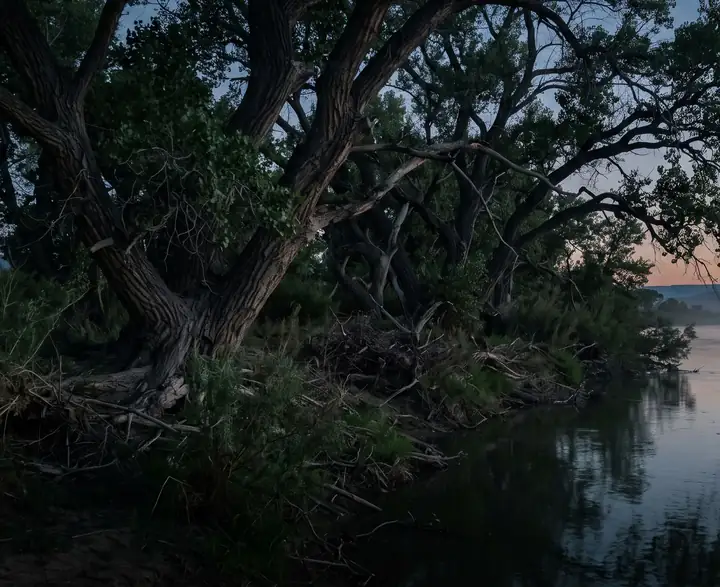
Fruita homeowners can get removal, trimming, stump grinding and storm cleanup quoted through GJ Tree Co. Older blocks hold mature elms and cottonwoods, new subdivisions hold young trees in compacted soil, and the Colorado River corridor holds Russian olive and tamarisk.
Get a free quote Call 970-902-1212Two different yards
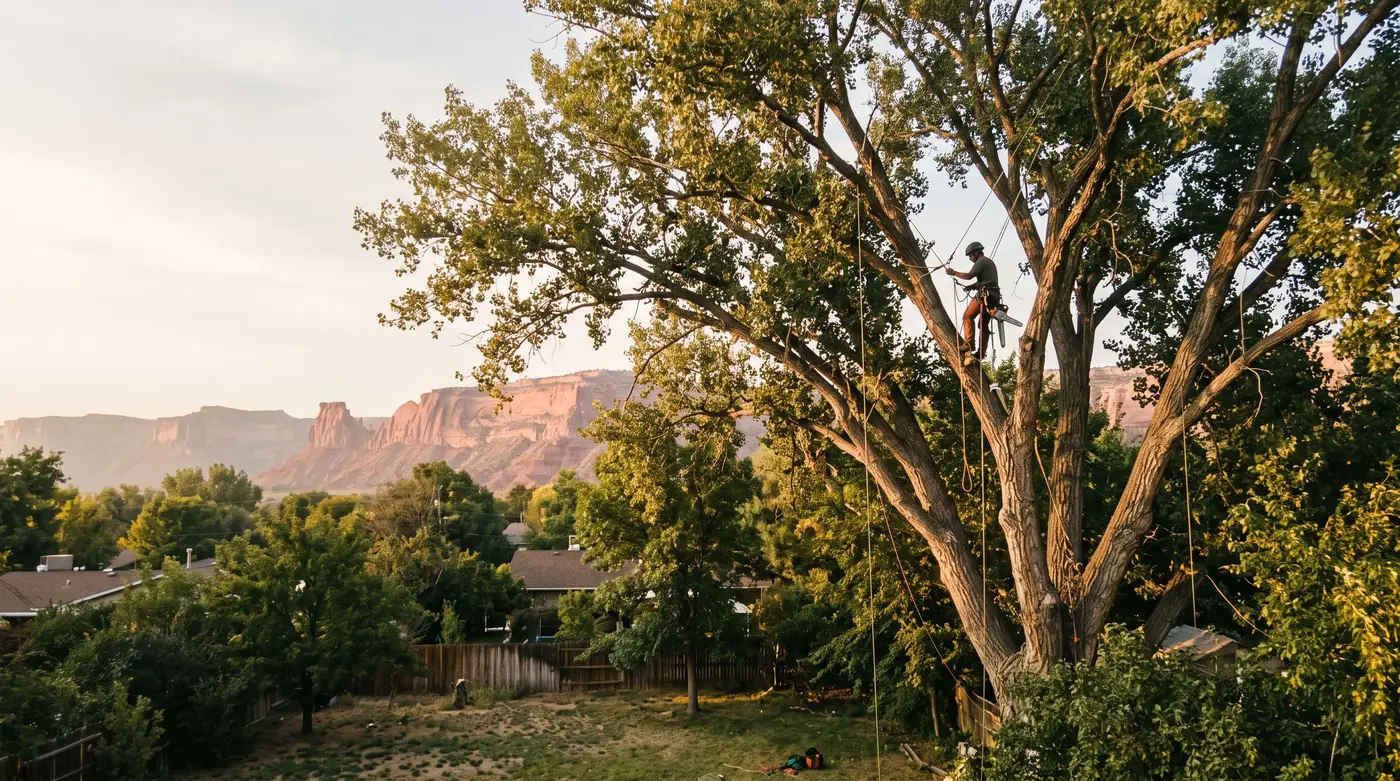
Fruita tree work splits in two. Around the older blocks near downtown, the jobs are big: mature elms and cottonwoods with heavy limbs over roofs and alleys. In newer subdivisions, the trouble is usually young trees struggling in compacted lot soil and alkaline clay, where structure pruning and better watering matter most.
Young trees are the cheap ones to get right. A little structural pruning now can head off a split union later. If leaves turn yellow with green veins, CSU Extension points to iron chlorosis, which is worse in compacted, clayey or wet soils.
West end of the valley
Most Fruita tree calls come back to wind and water. Spring and summer winds find weak limbs on brittle species, and many lots depend on seasonal irrigation. A tree can look fine in August and go into winter dry, which leaves it more likely to shed limbs the next year.
Have deadwood and long, heavy limbs looked at on old cottonwoods and elms, especially over roofs, fences and driveways.
Give trees a deep soak. The City of Grand Junction advises about 18 inches deep, every two to four weeks, for established trees here.
Stay clear of any wire and take photos first. Our storm page has the order of calls.
Along the water
Along the Colorado River and Little Salt Wash, Russian olive and tamarisk crowd out native trees. Both are on Colorado's List B of noxious weeds, and Mesa County's weed plan puts management on each landowner.
Short answers
What Fruita homeowners ask, with a straight answer where we have one.
Only for work inside Grand Junction city limits. The City of Grand Junction license covers that city. Fruita is its own municipality, so ask the City of Fruita what applies to a tree on or near public property. Either way, the City list is a handy check, because it shows each company's ISA number.
Ask the City of Fruita before anyone cuts. Grand Junction's street tree rules do not automatically apply in Fruita, and we would rather send you to the right office than guess. Ask about ownership and any permit first. If you live in a subdivision, your HOA covenants may also say something about street and yard trees.
Before the irrigation water shuts off, and again in dry spells. The City of Grand Junction advises deep watering for established trees here to a depth of about 18 inches, every two to four weeks. Fruita shares the same dry valley climate, so a tree on seasonal irrigation benefits from a deep soak before shutoff.
Plan for more than a chainsaw. Russian olive is a List B noxious weed in Colorado, and cut trees can resprout. Mesa County says managing listed weeds is ultimately each landowner's responsibility. Ask the crew how the stump will be handled, and whether treatment by a licensed applicator is part of the plan.
Send the details
Tell us what is going on with the tree. We follow up with next steps and a written price.
If a tree is on a power line or anyone is hurt, call 911 or your electric utility first.
Dead, leaning or too close to the house.
Deadwood, heavy limbs and clearance.
Ground below grade, ready to replant.
Who to call first, and what comes next.
Yellow leaves, dead limbs, beetles and cankers.
Support for a weak fork or a heavy limb.
Lots, brush, Russian olive and tamarisk.
Thinning and cleanup around the home.
Guides and tools: Grand Valley tree guide, Tree permit and HOA checker, Tree removal cost estimator, Storm alerts and damage help.
Fruita sits at the west end of the valley, near Loma and Grand Junction.