Steel cables
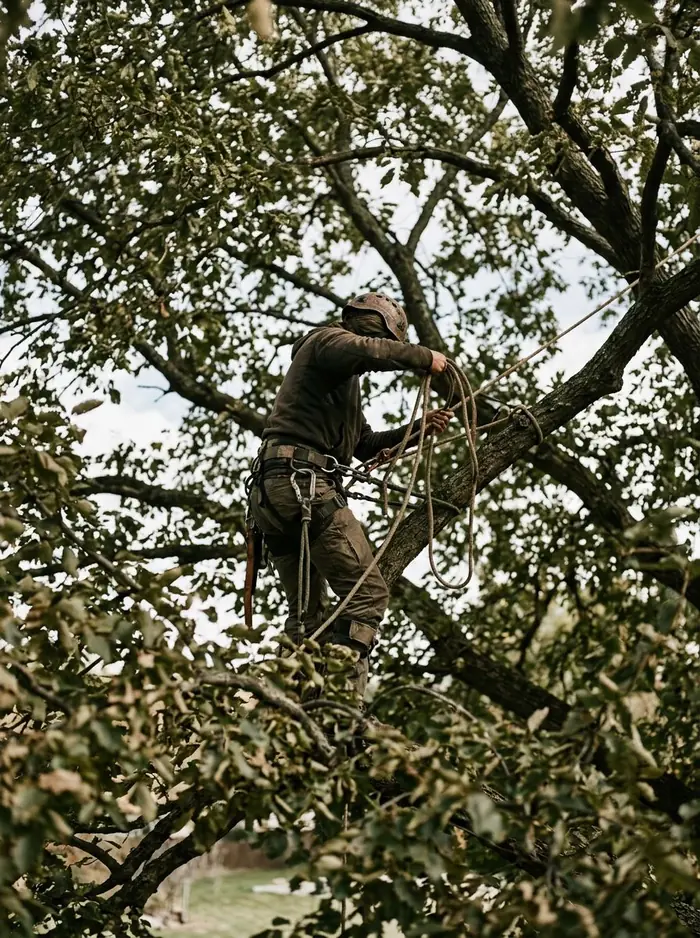
Extra-high-strength steel strand attached between limbs, high in the crown, to limit movement. Hardware is drilled into the tree.

Cabling and bracing in Grand Junction, CO
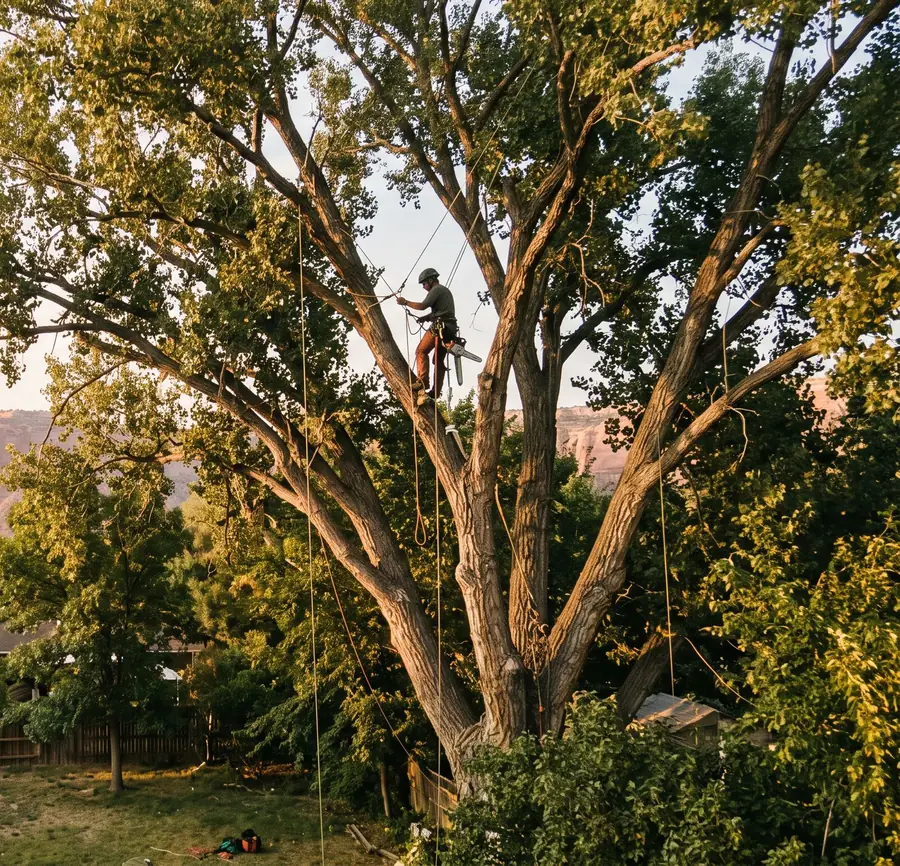
Cabling and bracing add supports inside the crown of a tree, using cables between limbs or threaded rods through a weak union. They can help a valuable tree with a split-prone fork stay standing. They do not remove all risk, and not every tree qualifies, so a qualified arborist should look first.
The options
Purdue Extension says early corrective pruning is the best way to prevent weak structure. Once a tree is big, supports may help where pruning would mean very large cuts. The most common failure point is a codominant fork, two stems of similar size meeting in a tight V.
Extra-high-strength steel strand attached between limbs, high in the crown, to limit movement. Hardware is drilled into the tree.
Synthetic rope attached without drilling. Purdue says it can be less damaging and works where hardware is not possible.
Threaded rods drilled through a weak union or multiple stems, giving more rigid support than a cable.
Lines or posts from outside the tree for a leaning trunk or a long, overextended limb.
Support or remove
Purdue frames it as one question: can the risk be reduced to an acceptable level for the owner? In the valley, fast growers like silver maple, cottonwood and Siberian elm often have soft wood, so a crew may advise against spending money holding one together.
Not sure? Ask for both options in writing. If the crew advises removal, our cost estimator gives you a rough range to compare.
After the install
Maintenance is small but it matters. Purdue Extension says to check supports from the ground every year for loose hardware or adjustments, and to have an arborist climb the tree about every three years for a closer look. Any pruning the tree needs should happen right before the system goes in.
Short answers
Short answers. We found no public local price for cabling, so we do not quote one here.
Cables run between limbs high in the crown and limit how far they move. Brace rods are threaded rods through a weak union, giving more rigid support lower down. They can be used together. Soft cabling uses synthetic rope with no drilling, and it suits some trees where hardware is not possible.
It lowers the odds of failure but it does not remove the risk. Purdue Extension says not all risk can be mitigated and not all trees can be reinforced. A tree with decay or a crack may be past helping. Ask a qualified arborist to judge eligibility before you pay for anything.
It depends on the hardware and the tree, and we found no local figure. Purdue says to check it from the ground every year and have an arborist climb up about every three years. Plan on follow-up visits rather than a one-time fix, and keep the paperwork for the next crew.
We advise against it, because a failed install can drop a limb on someone. Purdue calls installation a job for qualified arborists, and the work means climbing and drilling high in the tree. Inside Grand Junction, anyone doing tree work for hire needs a City license. Check our permit checker for other towns.
Sources
We read each page below on November 3, 2026. The cabling guidance comes from Purdue because we found no Colorado publication on it, so a local arborist should adapt it to your tree.
Types of support, codominant stems, limits and the inspection schedule.
AccessedHire a licensed arborist on private property, including for cabling and bracing.
AccessedThe license required for tree work for hire. An older copy, so confirm the current text with the City.
AccessedFast growers that are often soft wooded.
Accessed
Send the details
Send a photo of the whole tree and one of the union. A tree service professional can tell you whether support, pruning or removal makes sense, in writing.
If a tree is on a power line or anyone is hurt, call 911 or your electric utility first.
Dead, leaning or too close to the house.
Deadwood, heavy limbs and clearance.
Ground below grade, ready to replant.
Who to call first, and what comes next.
Yellow leaves, dead limbs, beetles and cankers.
Lots, brush, Russian olive and tamarisk.
Thinning and cleanup around the home.
Guides and tools: Grand Valley tree guide, Tree permit and HOA checker, Tree removal cost estimator, Storm alerts and damage help.