Cottonwood
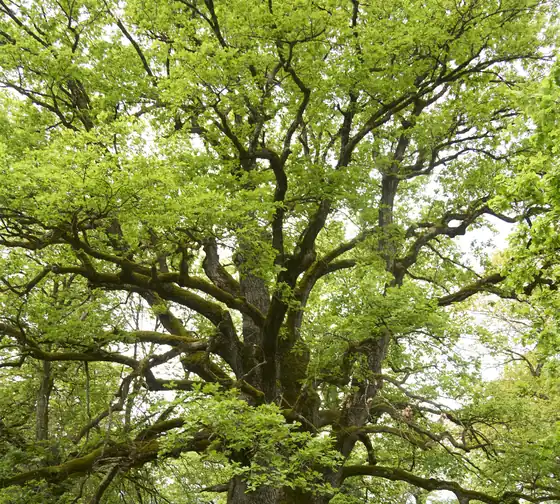
Fast growing and soft wooded. CSU Extension names it among trees that often break during storms, so a yearly look at heavy limbs beats a surprise.

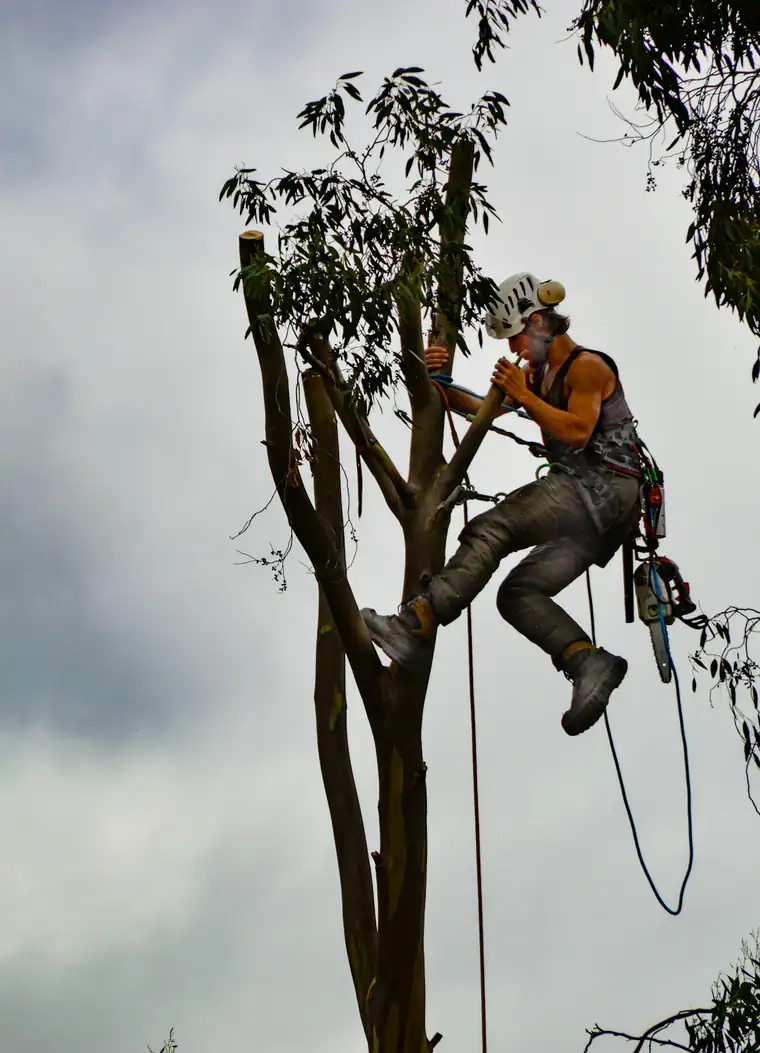
Removal, trimming, stump grinding and storm work across Grand Junction and the Grand Valley. Free quotes, fast replies.
Get a free quote Call 970-902-1212How this works
GJ Tree Co is where to get tree work quoted in Grand Junction and the Grand Valley. Tell us about the tree, and you get a written price before a saw starts. The yes or no always stays with you.
Where it is, what it's doing, what worries you.
You hear back the way you asked, with next steps.
You see it before a saw starts. Yes or no is yours.
What gets done
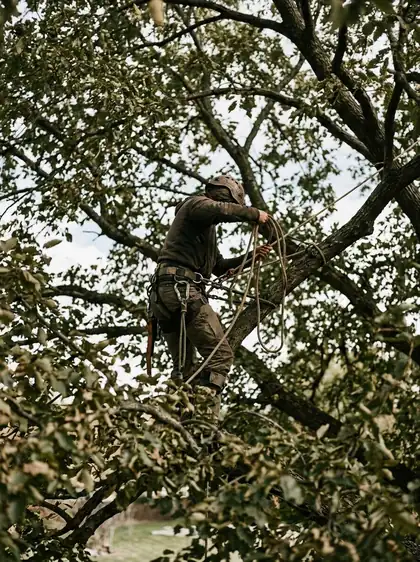
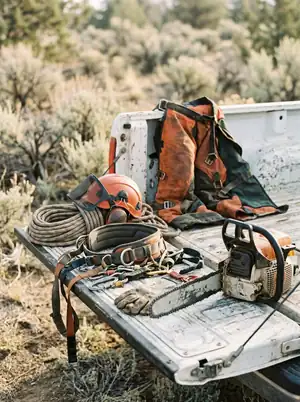
Four jobs cover most tree work in the Grand Valley: tree removal, tree trimming and pruning, stump grinding, and storm or emergency cleanup. On every job, you see the price in writing before a saw starts, and the choice stays yours.
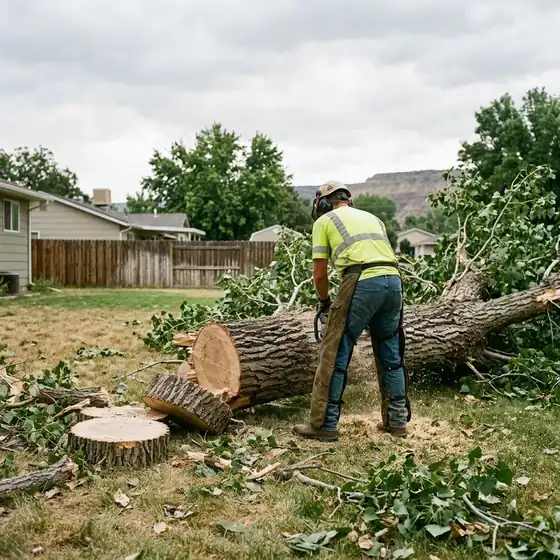
Get a quote Not sure what you need?Call 970-902-1212Dead, leaning, or too close to the house. Sectioned down and hauled off, including the big cottonwoods.
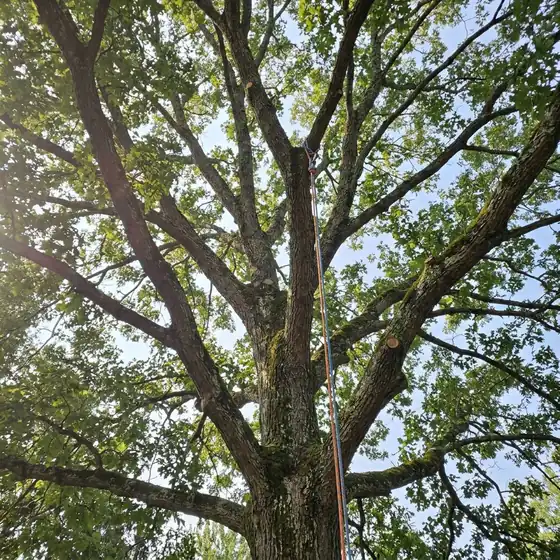
Deadwood out, weight off heavy limbs, clearance over roofs and driveways. No topping.
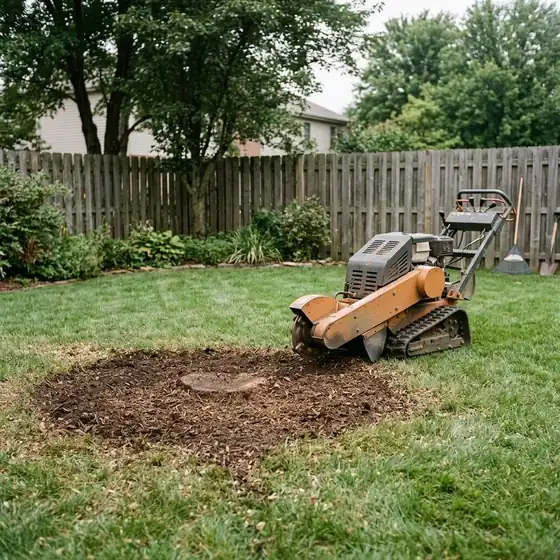
Ground below grade so you can replant, lay sod, or finally mow straight. Chips hauled or left, your call.
Limbs on the roof, trunks across the drive. Send the details and we follow up on how soon someone can get there.
Local knowledge
Four Grand Valley trees deserve a closer look: cottonwood, Siberian elm, Russian olive and ash. CSU Extension says fast growers like cottonwood and Siberian elm are soft wooded and break in storms. Grand Junction's Forestry Board no longer permits any of the four as new street trees.
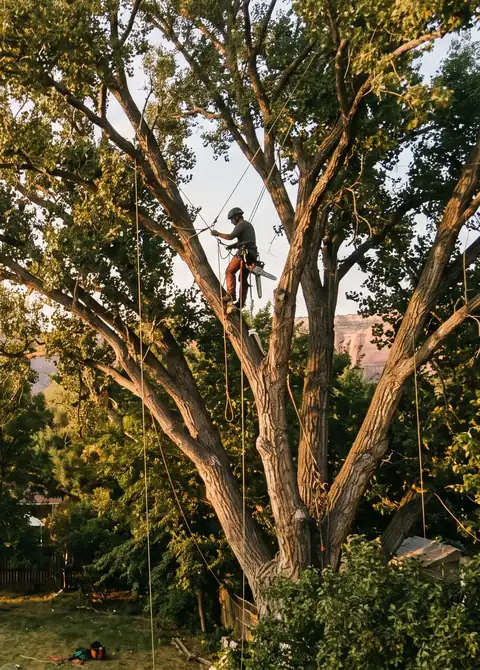
Fast growing and soft wooded. CSU Extension names it among trees that often break during storms, so a yearly look at heavy limbs beats a surprise.
CSU Extension calls Siberian elms brittle, with branches prone to breakage. Keep an eye on limbs over roofs, fences and alleys.
A List B noxious weed in Colorado. Mesa County has cleared it with chainsaws and chippers at Clifton Nature Park. Ask about the stump, since cut trees can resprout.
Emerald ash borer was confirmed in Carbondale in 2023, the first detection in western Colorado. If an ash crown is thinning, get it checked.
Why it matters here: the City of Grand Junction says local soils are high in clay, low in organic matter and alkaline, with about 9.4 inches of precipitation a year. Trees here need irrigation to survive. Replanting? The Forestry Board publishes a Grand Valley All-Star Tree List.
Planning ahead? Try the tree guide, permit and HOA checker, cost estimator or storm alerts.
Why get a quote here
With GJ Tree Co, the price comes in writing, with the stump and haul-off spelled out. Hiring on your own can work too. Either way, the City of Grand Junction publishes its list of licensed tree companies, so anyone can check a company.
One standard In every town we serve
Inside Grand Junction city limits, anyone pruning trees for hire needs a City license. The City asks for proof of $1,000,000 liability insurance, workers' compensation or a waiver, an ISA Certified Arborist on staff, a competency exam and a yearly fee.
The Grand Junction Forestry Board licenses tree companies each year. Check the City's 2026 list yourself.
The City's license calls for $1,000,000 per occurrence and $1,000,000 aggregate, plus workers' comp or a waiver.
One on staff, with a certification number on the application. The City's list shows each company's number.

Towns served
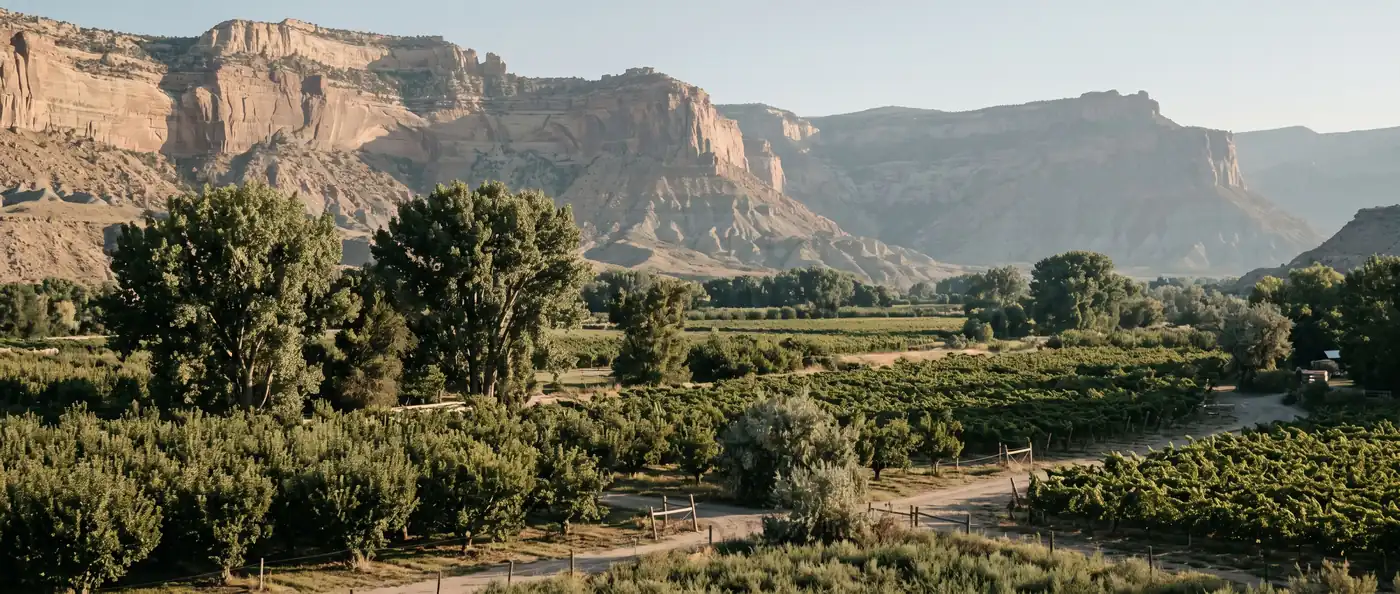
GJ Tree Co serves eight Grand Valley communities in Mesa County, Colorado: Grand Junction, Fruita, Palisade, Clifton, Orchard Mesa, Redlands, Loma and Whitewater. The City license rule covers work inside Grand Junction limits, so elsewhere, ask what applies at your address.
What to expect
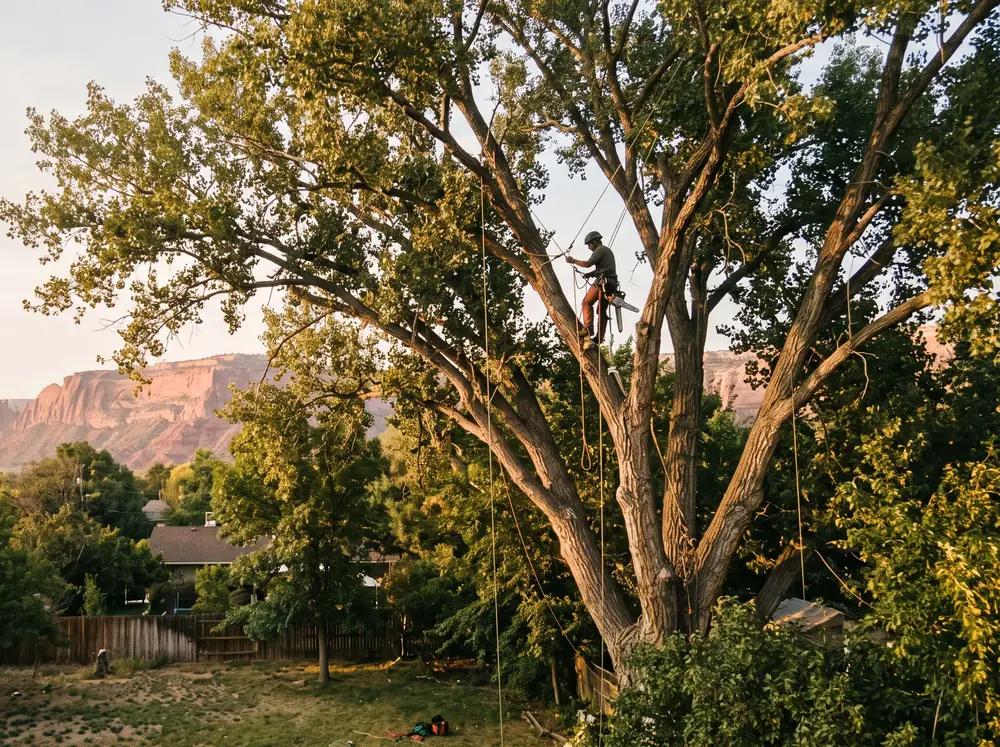
Removing a big cottonwood near a house in the Grand Valley usually means taking it down in sections and lowering the heavy pieces on ropes. CSU Extension says fast growers like cottonwood are often soft wooded and break during storms. Here is what the job involves, and what it typically costs.
Includes stump grinding and hauling, with a truck at the tree. From published cost guides adjusted by the local price index, and the power line premium is our own assumption. See the sources and the math.
Gallery
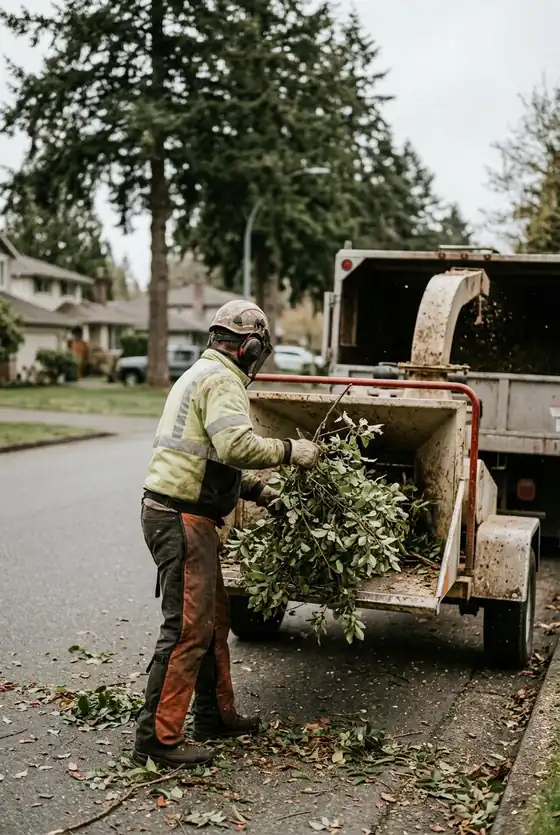
Straight talk on price
Typical Grand Valley ranges: tree removal about $210 to $1,910 per tree in an open yard, trimming about $240 to $630 per tree, and stump grinding about $130 to $490 per stump. They come from published cost guides, adjusted by the local price index, and being close to a house costs more.
$240 to $630
per tree
Keep a healthy tree safe and off the roof.
$210 to $1,910
per tree, in an open yard
The widest range, because size decides it. Being close to a house or power lines adds more.
$130 to $490
per stump
So you can replant, lay sod, or mow straight.
From published cost guides, adjusted by the Grand Junction price index. See the sources and the math. You still get an exact figure in writing.
Free tools
Four free tools built from city, county, state and university sources. Use them to find out what applies to your tree, what it might cost and what to plant next, whether or not you ever ask for a quote.
46 rules across 4 jurisdictions: Grand Junction, Fruita, Palisade and unincorporated Mesa County, plus utilities, canals and Colorado 811. It also lists 300 Mesa County HOAs, with tree rules for 35 of them. Every rule shows its source and the date we checked it.
Check your address22 trees from the city Forestry Board list with size, water, power line fit and chlorosis risk, plus 5 trees to think twice about, Japanese beetle and emerald ash borer.
Pick a treeEnter height, trunk, access and what is nearby to see a typical Grand Valley range across 4 size bands, with each source and assumption shown.
Run the numbersLive National Weather Service wind and storm alerts for the Grand Valley, and what to do about a damaged tree once it has passed.
See current alertsShort answers
The things Grand Junction homeowners want to know first, without a sales pitch.
A tree service professional, who gives you the price in writing. You get that price before any work starts, so you always know what it costs, who is on your property and who you are paying. The yes or no stays with you.
Plan on about $210 to $1,910 for a tree in an open yard. That is the typical Grand Valley range, from published cost guides adjusted by the local price index. A tree close to a house or power lines costs more. Height, lean and truck access move the price, and you get an exact figure in writing.
Yes, if the tree is on City property, typically the right-of-way between the sidewalk and the street. The City requires a public tree maintenance permit before pruning, removal or treatment, and asks you to request it before hiring a provider. For other trees, ask what applies at your address.
Check the City's published list. The City of Grand Junction posts its licensed tree care providers, with each company's ISA number and whether it does small tree work, large tree work or chemical application. The 2026 list was last updated September 14, 2026. A license is required to work within city limits.
Usually the City, with your help. Per Grand Junction municipal code 8.32.080, the adjoining property owner provides water for street trees and the City provides standard maintenance, meaning pruning and removal. If you want a private company to work on one of these trees, the City requires a permit first.
Not automatically. Emerald ash borer was confirmed in Carbondale in June 2023, the first detection in western Colorado. The Colorado State Forest Service advises weighing a tree's overall health and benefits when deciding between treatment and replacement, so have a thinning crown checked by an ISA Certified Arborist before paying for removal.
Your power company or 911 first. Stay well clear of the tree and anything it touches, and treat every downed line as live. Once the utility says the line is safe, send us the details and we will follow up on how soon someone can get there.
Local facts
Grand Junction licenses tree companies through its Forestry Board, requires a permit for work on City trees, and publishes the list of licensed tree companies. These facts come directly from the City, Mesa County, CSU Extension and the state. Sources were last checked .
Tree services and anyone pruning trees for hire must have a license to work within Grand Junction city limits, issued through the City Forestry Board.
City of Grand Junction, Tree Care ServicesLiability insurance of $1,000,000 per occurrence and $1,000,000 aggregate, workers' compensation or a waiver, an ISA Certified Arborist on staff, and a $75 yearly fee, plus a competency exam.
City of Grand Junction, Arborist LicensingThe City's 2026 list, last updated September 14, 2026, names 22 providers with ISA numbers and whether each does small tree work, large tree work or chemical application.
City of Grand Junction, Licensed Tree Care Providers (PDF)A public tree maintenance permit is required before pruning, removing or treating any tree on City property, typically the right-of-way between the sidewalk and the street.
City of Grand Junction, Tree Care ServicesThe Forestry Board no longer permits cottonwoods and other poplars, aspen, willow, Siberian elm, ash, silver maple or Russian olive as new street trees.
City of Grand Junction, Approved Street Trees (PDF)Grand Junction soils are generally high in clay, low in organic matter and alkaline. The city averages about 9.4 inches of precipitation a year, and its trees need irrigation.
City of Grand Junction, General Tree CareMany Colorado soils are naturally high in lime. Yellow leaves with green veins can mean iron chlorosis, which is worse in compacted, clayey or wet soils.
CSU Extension, Iron Chlorosis of Woody PlantsFast growers including cottonwood and Siberian elm are often soft wooded and break during storms. Siberian elm branches are brittle and prone to breakage.
CSU Extension, Selecting Trees and Elm TreesColorado lists Russian olive as a List B noxious weed. In November 2024, Mesa County treated it along with Siberian elm and tamarisk at Clifton Nature Park and The Ponds.
Colorado Department of Agriculture and Mesa CountyConfirmed in Carbondale in June 2023, the first detection in western Colorado. Ash may make up 15 percent or more of all urban trees in Colorado.
Colorado State Forest Service
Send the details
Got a tree on your mind? Send the details and we get back to you with next steps.
If a tree is on a power line or anyone is hurt, call 911 or your electric utility first.